Oct 29
Communism’s Crimes Against the Environment
Many argue that environmental degradation, pollution, and climate change are some of the most pressing problems of the 21st century. How mankind addresses such existential concerns, just like others including nuclear weapons or artificial intelligence, invites a variety of explanations and solutions. Today’s communists have their own answer, and unsurprisingly they believe that capitalism is the sole current and historical culprit completely responsible for environmental degradation. They proudly claim that only the establishment of a socialist and then communist society under their unopposed leadership can save the planet. Yet when we examine their history and doctrine, we see a much dirtier record where preserving the environment was one of the many things sacrificed for their race to build a “utopian workers’ paradise.”
Contrary to popular belief, communist concerns about the environment go back much farther than the last couple decades. When Friedrich Engels spent time in Manchester, England, he was appalled by its industrial pollution and used it as an example of capitalist malfeasance. The Soviet government printed posters and pamphlets asking citizens to be environmentally conscious during the Cold War. As mainstream environmentalism rapidly grew, American communists incorporated ecological concerns in their anti-capitalism in the 1970s and 1980s. Gus Hall, the CPUSA General Secretary from 1959 to 2000, blamed capitalism for environmental destruction in his book titled Ecology: Can We Survive Under Capitalism? One would then expect that the communist regimes of the 20th century would have exercised special care of the environment, but history shows that is far from the truth.
The examples of communist environmental destruction are many and gravely serious. In North Korea, overuse of pesticides and over-logging destroyed soil quality and contributed to famine. In Serbia, the Yugoslav regime rapidly expanded the steel industry in Smederevo, destroying the soil of traditional Serbian vineyards. In Maoist China, the “Four Pests” extermination campaign ended up damaging local biodiversity after the regime forced millions to slaughter species en masse. The USSR built heavy industries that poisoned the air in many cities like Magnitogorsk. Corner and cost cutting contributed to the Chernobyl nuclear disaster. The full list could be the size of a phone book, but one of the most infamous examples that deserves special acknowledgement is what happened to the Aral Sea.
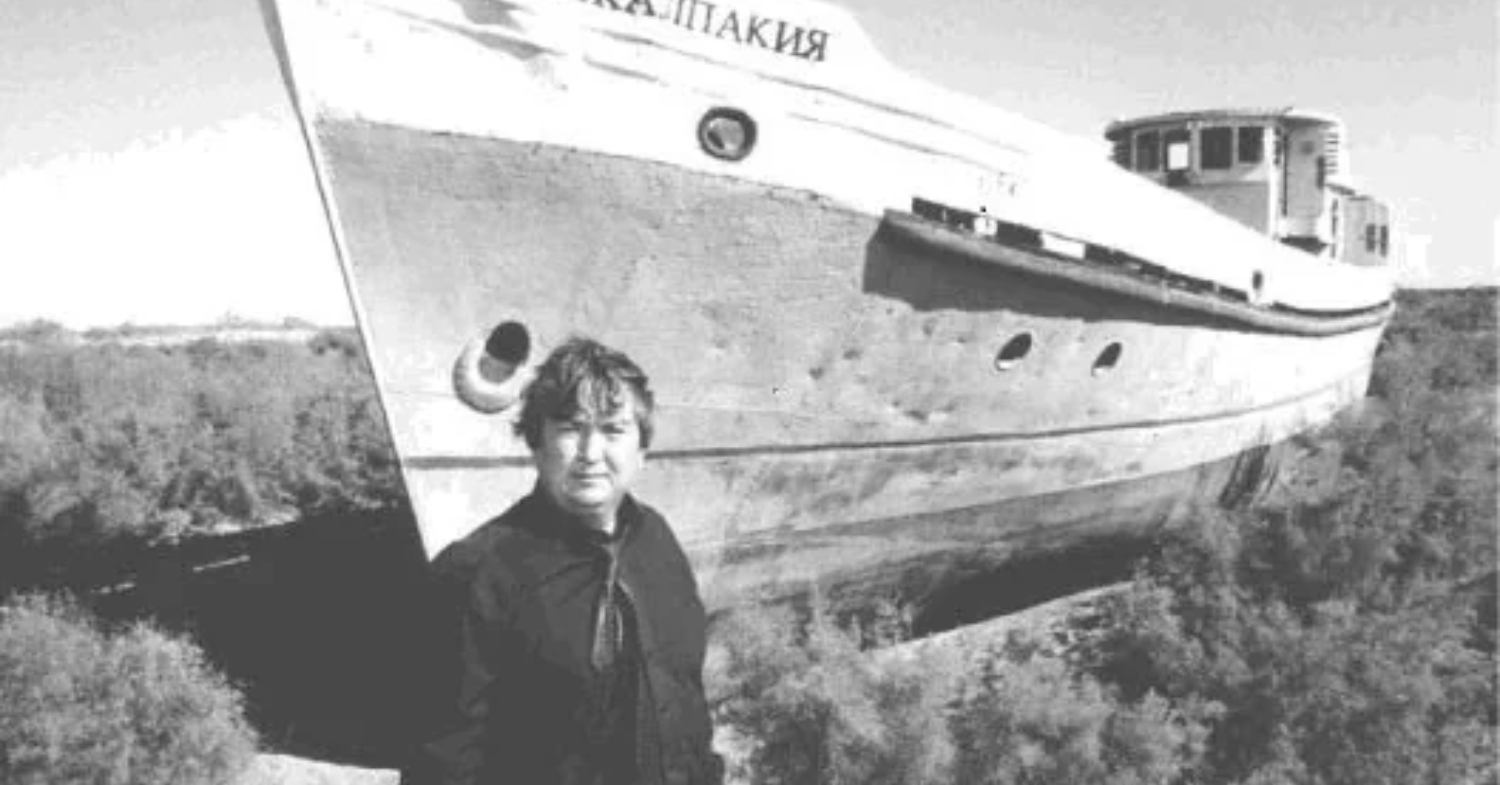
The Aral Sea is an endorheic saltwater lake that sits between Kazakhstan and Uzbekistan and was once the third largest lake in the world with significant biodiversity. During the 19th and early 20th century, local fishing and an Imperial Russian naval presence was the most serious human interference in the local ecosystem, but this changed under the USSR. Starting in the 1960s, the Soviets established large cotton farms in the Uzbek and Kazakh SSRs. Cotton consumes lots of water, and to get the water these cotton fields needed, irrigation channels were dug to suck water from the Aral Sea with massive toxic pesticide and fertilizer use following to keep yields high. What came next was an ecological disaster and an environmentalists’ worst nightmare. Every following decade the Aral Sea significantly shrunk. Local species of marine wildlife died off. Soil erosion and desertification spread rapidly. Today, the Sea is quite small and is littered with abandoned boats and harbors on kilometers of damaged soil. Ironically, multi-national organizations led by capitalist nations have set aside money to replenish a natural landmark devastated by socialist agricultural development.
These tragedies weren’t anomalies, rather they were already likely to occur in some shape or form as a product of the communist system. The heavy industry-focused command economies demanded economic growth and expansion for building socialism regardless of consequences. When state planners and party members were given a choice, nine out of ten times they would rather comply with five-year plan targets and the dictate of the party than care for the environment. Meanwhile in western capitalist democracies, citizens independently mobilized, petitioned, spoke out, and voted in free and fair elections to force leaders to enact environmental protections. This would not be possible in a one-party communist dictatorship, where critique and activism against state policy invited ruthless repression. If an environmentalist group tried to protest pollution in a nation like the USSR, the only change they will achieve is a change of address to a prison cell.
Many communists will try and retort that these were historical excesses, and that true Marxism is environmentalist. Even if we are to try and believe this, communist doctrine itself falls short. In Marxism, man’s material world and circumstances must be mastered by the proletariat for its own progress which includes exploitation of nature. In the Communist Manifesto, one of the immediate policy demands was the “cultivation of wastelands” for economic development. Most fundamentally of all, communist parties who claim to represent “the people” demand total subservience to its will. Dissent means punishment, and if the party is in favor of and enacts policy that is environmentally unfriendly, then good luck trying to get them to reconsider.
The challenge of addressing existential problems and injustices within our modern society will always elicit demands for radical changes, especially over issues with the environment. Yet in our effort to address these problems, we must not impulsively turn to a system that already failed to deliver on what its acolytes are promising today. Communism’s autocratic one-party regimes, inefficient and wasteful industry-obsessed command economies, and culture of obedience contributed to ecological disasters and made environmentalist reforms harder compared to the non-communist west. If we are looking for a solution to ecological issues, then communism is not one of them.