

Aug 19
Products Made with Chinese Forced Labor Will Soon be Easier to Keep Out
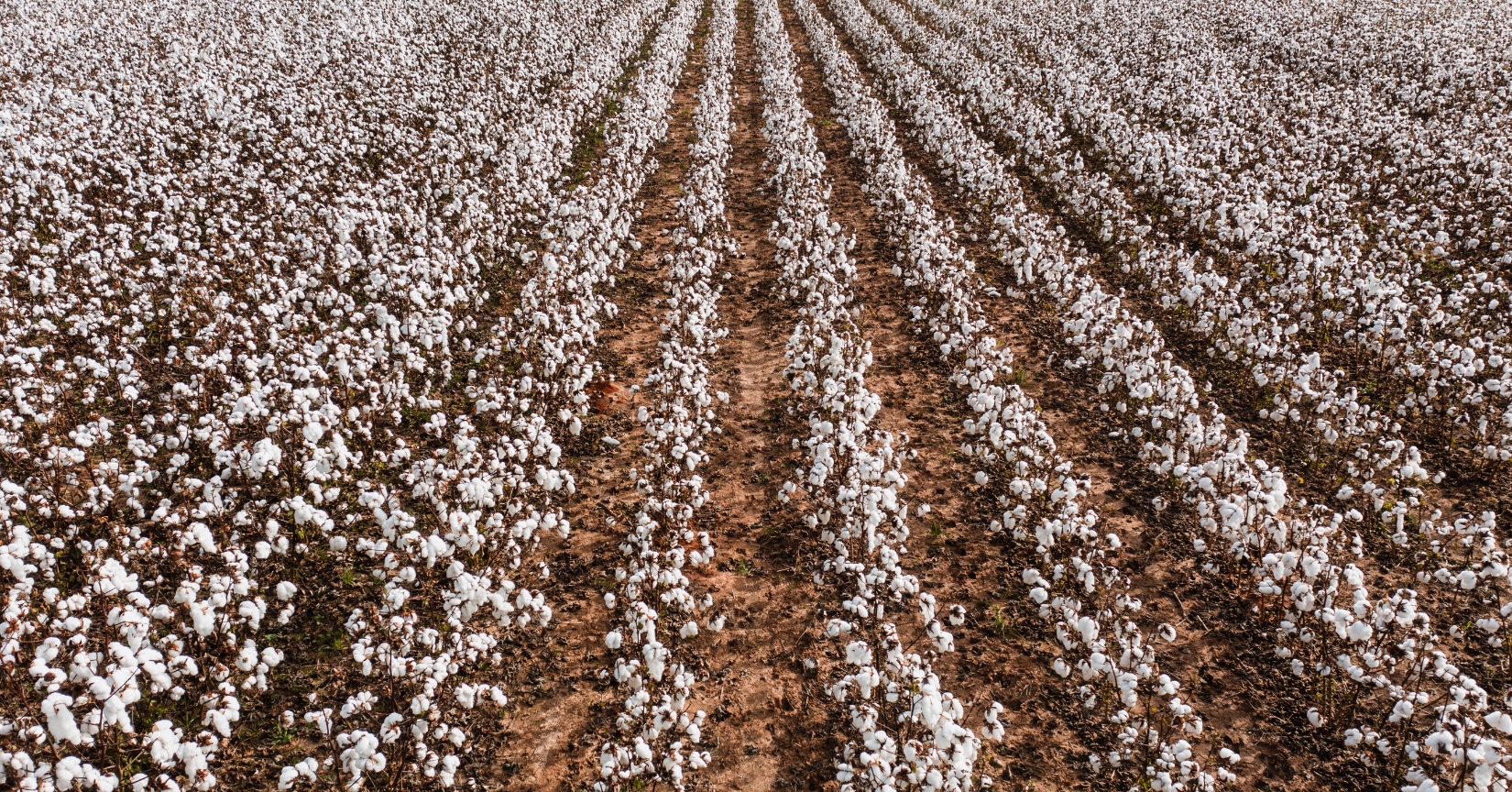
In the province of Xinjiang, China operates the world’s largest system of state-imposed forced labor. Government documents reveal how millions of Uyghurs and members of other population groups are systematically put to work through coercive programs.
From cotton and tomatoes to the polysilicon in solar panels and the critical minerals in batteries for electric vehicles: countless products with a link to Xinjiang still reach European supply chains and European households.
The European Union’s answer to this growing problem, and to the persistent issue of forced labor worldwide, is the Forced Labor Regulation. These rules prohibit the export and the sale within the EU of products manufactured with the help of forced labor.
Evidence
During the negotiations on this measure, the emphasis lay on the burden of proof. The reason: in a state that itself imposes forced labor, workers cannot speak freely, and valid audits therefore cannot be carried out.
On the advice of experts, myself included, the European Parliament consequently wanted a reversed burden of proof: goods from regions characterized by state-imposed forced labor would be regarded as tainted, unless companies could prove otherwise.
The member state governments in the Council rejected this. The final regulation, in force since December 2024, places the full burden of proof on the European Commission. The ban takes effect on 14 December 2027.
Expectations for these guidelines were modest. On closer examination, however, the Commission turns out to have made good use of the limited scope the legislation allows.
In the first place, suspicions of Chinese forced labor are to be investigated as a matter of priority. The guidelines proceed from the assumption that this forced labor is considerable in both scale and severity.
Second, the guidelines specify precisely which evidence counts, including “documents from government bodies that point to state-imposed forced labor programs”.
This is also the material on which my own research is based. Beijing likes to frame these programs as poverty alleviation. The documents belonging to these programs, however, contain penalties in the event of refusal, and political indoctrination of unwilling workers.
A police officer recently confirmed that Uyghurs who refuse to cooperate face administrative intimidation and short-term detention.
It is moreover important that Europe does not regard the social audits and inspections carried out in the affected regions as credible evidence. Such inspections examine the human dimension of business operations. In Xinjiang, however, they are known to be notoriously unreliable.
Violation
Third, because direct evidence from workers and factories is often impossible to obtain, the new EU guidelines provide that “indirect and circumstantial evidence” will play a larger role. Such evidence can be sufficient to establish a violation. Crucially, administrative law is followed here rather than criminal law. Under the latter, individual guilt would have to be proven beyond any reasonable doubt.
Fourth, and probably the most far-reaching, is the interpretation of the “non-cooperation clause”. Chinese data security legislation and the “anti-sanctions rules” make it virtually impossible for the EU’s investigating departments to obtain relevant information.
The Chinese authorities moreover deny that forced labor exists. The guidelines respond to this by stating that “non-cooperation in principle constitutes the evidence” that “there should in general be a sufficient basis for establishing a violation”.
A refusal to cooperate can therefore in itself demonstrate a violation. Because the regulation does not reverse the burden of proof, this clause is the most realistic way of establishing state-imposed forced labor.
Finally, the guidelines suggest that investigating authorities will probably not have to prove that forced labor occurs in an individual factory.
They must demonstrate two things: that state-imposed forced labor is taking place “in a specific geographic area”, and that a product is “related to that practice of imposing forced labor or to that geographic area”.
Proving the regional connection will be a considerable challenge. Chinese companies with ties to Uyghur forced labor actively seek to conceal their supply chains.
Whether the European import ban can effectively curb the importation of goods connected to this forced labor depends above all on its implementation and on political will.
Courage
The Commission must have the courage to confront Beijing by swiftly opening an investigation into major product lines connected to Xinjiang. The Commission must have the courage to apply the new evidentiary rules and the “non-cooperation principle”, and to issue the first prohibition orders.
Only then will Dutch customs be empowered to turn away the shipments in Rotterdam. Rotterdam is the most important gateway for Chinese goods entering Europe. Consumers deserve to know that the products they buy are free of coercion and abuse.
This article by VOC’s Senior Fellow and Director of China Studies Dr. Adrian Zenz was originally published by Nederlandsdagblad, in Dutch.