
Feb 20
Stories of Communist Education: Subversive Indoctrination in Early School Days
A child’s daycare and elementary years during the Ceaușescu era were progressively littered with more and more propaganda for the Communist cause. Parents who had already experienced the perverse effects of such an ideology on their own lives were willing to risk their family’s livelihood and safety to leave and protect their children. Collective consequences were given for personal opposition to the Party and those who once submitted to the communist yoke risked it all to escape. Others slowly began to notice contradictions in communist rhetoric leading them to quietly doubt the lofty ideals of the Socialist Republic of Romania that they once accepted.
Raluca and Feli, who were both born in the early 1970s, recounted their time in kindergarten, but this seems to have been an optional daycare since attendance was certainly not a universal experience among other interviewees. As a mother and not so much through her own experiences, Tania became well acquainted with the kinder curriculum due to her three-year-old daughter’s attendance. She will never forget September 15, 1978, when her daughter came home from kindergarten saying, “You are not my parents. Mr. President is my father, and his wife is my mother. They are giving us food, and they are raising us.” Up to this point, Tania had decided to hold off on having more children as she had been struggling to provide formula to feed her only young daughter due to the shortages plaguing Romania as a result of Ceaușescu’s policies. She already lived under the “idea which infiltrated every brain in Romania” that no one could be trusted since anyone around her, including one’s own family, could spy and report her to the Party. As Alin and Mihaela recounted, people would be imprisoned or disappear and never be seen again for crimes of disloyalty to the Party. This remark from Tania’s young daughter, along with the time her child interrupted a private conversation between her and her husband about Ceaușescu’s actions to insist they refer to the dictator as “Mr. President” instead of using his last name, was the tipping point in her decision to leave Romania. She said to me: “[I] was able to live with the lies… but [she] couldn’t stand the idea that [her] daughter would be brainwashed and not be able to think for herself.” Tania’s resolve to leave and remove her daughter from schools that taught allegiance to the communist cause—which left their family desperate for necessities and now sought to usurp her parental guardianship—was firmer than ever before in the face of this blatant indoctrination.
Tania said: “I was grown-up already in my mind,” so she was already steeled against the Communist Party and was not worried about personally falling under the influence of this propaganda when her daughter started to succumb to it. But she too was born into a communist regime and was not always so grown up and strong-minded. She knew what the regime knew as well—children are most impressionable in their younger years, which allows indoctrination more power to secure allegiance. Tania was born into the regime of Gheorghe Gheorghiu-Dej and only went to daycare at the age of five and a half, but she could not recall this same brainwashing during her time. As an adult looking at what was taught to her daughter, she understood Ceaușescu’s new policies as particularly harmful. She would not allow her daughter to be molded into the ideal communist, so she formally asked for permission to leave. These requests were ones of courage as they were not taken lightly by the communist government. The societal ramifications that would come for deserters or even perceived deserters were so significant that family members of the disloyal could be fired, punished, or imprisoned. For Tania, the circumstances of her requested departure were particularly favorable since she was Jewish. At the time, Israel offered to pay the Romanian government for any Jews that would move to Israel. Even so, the process was far from easy and caused her and her family various hardships.
As a result of Tania’s request to leave the country for Israel, her mother, who was a member of the Communist Party and had done nothing to merit punishment, was soon out of work and never allowed back. It did not matter how trustworthy or invested one’s family was in the Party, and it did not matter if the government would benefit financially from the departure—it was still a nightmare trying to leave. But it was often much worse if your kin escaped illegally as the family could be punished severely, and this dissuaded many from pursuing a freer life in the West. Finally, after two years in limbo and receiving denials from the government, Tania’s family was granted leave to Israel.
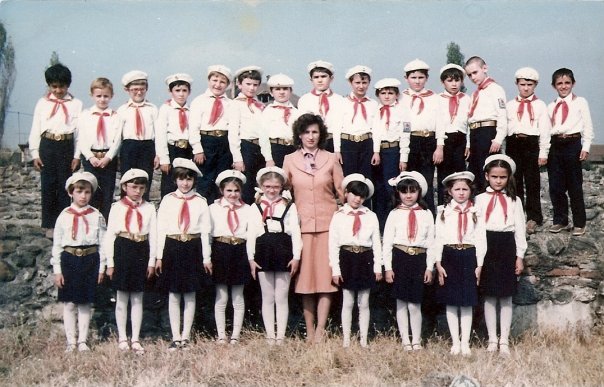
Similarly, Gabi recalled one of the few times she was able to venture abroad for a school gymnastics competition. One day—under the strict surveillance of her gymnastic coaches, who kept the passports of each competitor so they could not leave—her fellow teammate disappeared and possibly escaped. Gabi remembers “crying so badly because [she] was afraid” of the ramifications and following interrogations. All the teammates who were questioned had no information, including herself, so nothing came out of the search, but Gabi understood why her friend had left and kept her plans to herself. She said that back then, everything was “hush hush… you don’t speak about [escaping] you just do it without anyone knowing.” But she said, “I wish I would have known. Maybe I would have run away with her, then again, the thought that my parents can get in trouble, I couldn’t bear that.” Gabi understood the weight of one’s decision to try to leave Romania; her desire for freedom was tethered by the fear of harm coming upon her parents as a result of her escape. Though she desired freedom, she didn’t have a sponsor country like Liana had Israel, and the fear of the subsequent consequences outweighed any escape plan she ever dreamed of forming. For most students, an introduction to communist involvement and propaganda didn’t begin with daycare or school competitions abroad, it began in first to second grade with “Organizaţia Pionierilor,” or “The Pioneer Organization.” This group was a somewhat exclusive communist club that the best of young students were invited into before the inclusion of the rest. Almost everyone I talked with recounted their participation as pioneers, which came with specific uniforms, songs, and meetings to symbolize allegiances to the Socialist Republic of Romania. Tania, Liana, and Aurelian were selected as the first pioneer members among their peers due to their academic excellence. This award came with prestigious public acclaim and a fancy red scarf signifying their admission into the communist student club that would only later be allowed to almost all their peers. Aurelian mentioned there was probably still a vetting process for who could become a member, but nearly every student, except maybe those with terrible grades, was accepted. This public commendation and gifted association into the Communist party as a reward for good grades effectively messaged young students that academic excellence would open doors where one could be granted respected communist status. This reward for academic success taught students to see party prestige as an—or possibly the—honorable prize worthy of attaining.
“We were like robots, doing what we were told,” said Feli, recalling her time as a pioneer when students were required to praise Ceaușescu as their good, perfect leader. In her third grade, school officials gathered together thousands of students from all over her area to form an assembly. The children were directed to stand and wait in uniform for the coming of Ceaușescu for upwards of six to seven hours. In the heat, without food and without water, they held small flags and stood in formations just like the North Koreans who assembled for Kim. Their teachers arranged them in such a way to form various words and symbols visible from Ceausescu’s rolling car as he drove through their town without stopping for the mass of kids cheering him on.
These unassuming pioneers would continue as such until eighth grade when the organized allegiance to the Party was now transformed into the “Union of the Communist Youth,” the UTC, a much more blatantly political name. It was rather normal for all students (whether they were members or not) to be required to attend various UTC administrative and political meetings, one of which Tania recalls was particularly memorable. A communist leader from East Germany was visiting that day and appraised the Romanian students of the merits of their geographical station. He emphasized Romania’s luck by being entirely surrounded by communist countries as opposed to his own, where many East Germans were somehow able to tap into the radio channels of “the West” on their border. Little did he know many Romanians could also tap in and listen to “Radio Free Europe” and whatever other Western stations were accessible. More importantly, though, for Tania, this East German’s perspective was not an encouragement but a sobering moment of relinquished pride in her UTC membership. She said: “That was practically the end of my proud belonging to any form of [communist] organization.” The man’s outward acknowledgment of censorship opened questions in Tania’s mind on why anything needed to be hidden from the Eastern Bloc if communism was really as great, and the West as bad, as she was taught. In this case, and it seems many others, open indoctrination led not to loyal subjects but silently doubtful pupils.
Deniza Toma, an Arizona native, recently earned a Master’s degree in Classical Liberal Education and Civic Leadership. Growing up, she was deeply influenced by firsthand accounts of the terrors of communism shared by her grandparents and parents, who risked their lives to escape Romania. These personal narratives, combined with her curiosity about educational systems, motivated her to pursue further research into education during the Romanian communist regime. The opinions expressed by the author of this piece do not necessarily represent the views of the Victims of Communism Memorial Foundation.
Photo: Members of the Romanian Pioneer Organization by G.B. via Wikimedia Commons under CC BY-SA 3.0.